 Saqib K
What Are High-Altitude Platform Stations (Haps) Explained
1. HAPS occupies a sweet spot Between Earth and Space
There is no need to distinguish between ground towers against orbiting satellites. Platform stations operating at high altitudes operate in the stratosphere. It is typically between 18 and 22 kilometers above sea level — an atmosphere that is at a level that is so steady and secure that a properly designed aircraft can remain in its place with astonishing accuracy. This altitude is large enough to serve enormous geographic footprints from a single vehicle, but still close enough to Earth that latency in signal transmission stays lower and the hardware does not have to endure the extreme radiation environment that orbits space. This is an unexplored portion of sky, and the aerospace world is just at the beginning of developing it.
2. The Stratosphere is more tranquil than You'd Think
One of the most baffling fact about the flight of the stratospheric is how stable the surrounding environment is contrasted to the turbulent troposphere below. At the stratospheric level, the winds are generally gentle and steady, which is critical for station keeping — the capacity of the HAPS vehicle to keep the same position above the area it is targeting. For earth observation or telecommunications missions, drifting even by a few kms could affect the quality of coverage. Platforms designed for real station-keeping, such as Sceye Inc.'s platform Sceye Inc, treat this as a fundamental design requirement rather than an as an afterthought.
3. HAPS Stands for High-Altitude Platform Station
The name itself is worth delving into. A high-altitude platform station is defined in ITU (International Telecommunications Union) frameworks as being a station situated on one of the objects at an elevation of 20 to 50 km at a defined, nominal fixed location relative to Earth. The "station" section is intentional they aren't research balloons floating across continents. They're observation and telecommunications infrastructures, that are located at stations conducting continuous missions. Think of them less like aircraft, and more as high-altitude, flexible satellites with the capability to return, be serviced, and redeployed.
4. There are a variety of types of vehicles under the HAPS Umbrella
There are many variations of HAPS vehicles look the exact same. The class comprises solar-powered fixed-wing aircraft, airships that are lighter than air, and balloons tied to a tether. All have trade-offs involving payload capacity, endurance, and cost. Airships as an example have the capacity to carry heavier loads for longer periods since buoyancy does most of the lifting and frees up sunlight for propelling, station keeping and onboard systems. Sceye's solution employs a lighter airship design specifically to maximise payload capacity as well as mission endurance — an intelligent architectural selection that separates it fixed-wing competitors that are trying to break altitude records with only a small amount of load.
5. Power Is the Central Engineering Challenge
Being in the stratosphere for a period of weeks or months without refuelling is solving the energy equation with minimal margin of error. Solar cells harvest energy during daylight hours, but this platform must withstand dark night with stored power. This is when battery energy density becomes vital. New developments in lithium-sulfur cell chemistry and energy density approaching 425 Wh/kg — make stratospheric endurance missions increasingly viable. In conjunction with a rise in solar cell efficiency, the aim is to have a closed power loop which generates and stores enough energy each diurnal cycle to continue full operation for a long time.
6. The Footprint Coverage Is Huge If compared with Ground Infrastructure
A single high-altitude platforms station at 20 km in altitude can cover a ground footprint of more than a hundred kilometres. A standard mobile tower can cover some kilometres at the most. This is why this asymmetry is what makes HAPS particularly appealing to connect rural or remote areas where the construction of terrestrial infrastructure is not feasible. A single vehicle in the stratosphere can complete what could otherwise require dozens or hundreds of ground-based assets, making HAPS one of the most convincing solutions proposed to address that persistent connectivity gap.
7. HAPS can carry multiple payload Types at the same time
In contrast to satellites, that tend to be locked into a fixed mission plan at launch time, stratospheric platforms can carry multiple payloads and be reconfigured between deployments. One vehicle might have an antenna for broadband delivery alongside sensors for greenhouse gas monitoring and wildfire detection as well as oil pollution monitoring. This multi-mission flexibility is one of the most economically convincing arguments in favor of HAPS investment. The identical infrastructure supports connectivity as well as temperature monitoring simultaneously, rather than needing separate assets dedicated to each function.
8. The technology allows Direct-to-Cell as well as 5G Backhaul Applications
From a telecoms point of view, what is what makes HAPS especially interesting is its ability to work with existing device ecosystems. Direct-to cell technology lets smartphones to connect without specialist hardware, while the platform acts as a"HIBS" (High-Altitude IMT Base Station) that's essentially a cellphone tower that is in the sky. The platform can also be used for 5G backhaul by connecting remote earth infrastructure to other networks. Beamforming technology allows platforms to target signals precisely to the places where there is a need instead of broadcasting across the board increasing the efficiency of spectral refraction.
9. The Stratosphere is now attracting serious Investors
A niche research domain 10 years ago has drawn substantial funding from major telecoms companies. SoftBank's alliance with Sceye on a proposed nationwide HAPS service in Japan with a focus on pre-commercial services in 2026, represents one of the biggest commercial commitments to soaring connectivity to date. This is a sign of a shift away from HAPS being viewed as an experiment to being treated as deployable, revenue-generating infrastructure — which is an important factor for the wider business.
10. Sceye Represents a New Concept for a Non-Terrestrial Infrastructure
Founded by Mikkel Vestergaard, based in New Mexico, Sceye has become a prominent longer-term player within what is truly a frontier area in aerospace. The company's primary goal is to integrate endurance, payload capacity and multi-mission capability is the conviction that stratospheric platforms can become an ongoing layer of infrastructure across the globe that is not a novelty or a gap-filler or a gap-filler, but a truly third-tier that sits between the terrestrial network as well as orbital satellites. For connectivity, climate observation, or disaster response, high elevation platforms are beginning to appear less like an exciting concept and more like a necessary part of the way that humanity monitors and interacts with the planet. See the best sceye for blog recommendations including HAPS technology leader, Station keeping, softbank investment in sceye, aerospace companies in new mexico, sceye aerospace, Real-time methane monitoring, Stratospheric platforms, sceye haps project status, Real-time methane monitoring, sceye haps project status and more.
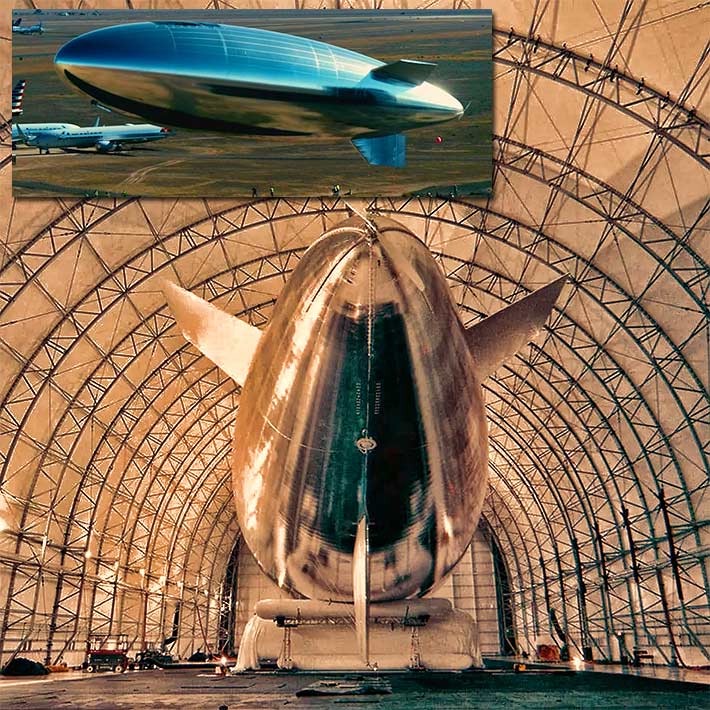
Mikkel Vestergaard's Vision Behind Sceye's Aerospace Mission
1. Founding Vision Is an Underrated Aspect when it comes to Aerospace Company Outcomes
The aerospace business produces two broad categories of firms. The first one is based on a technology looking for applications which is an engineering skill in search of a marketplace. The second takes a problem that matters and works towards the technology needed to address the issue. The distinction might seem abstract when you examine what kind of business actually does and what partnerships it seeks to establish and the way it decisions when resources are limited. Sceye fits into the second category, and knowing the importance of orientation is crucial for understanding the reason why the business chose the specific choice in its engineering strategy -lightweight design, multi-mission payloads, the emphasis on durability, and also a founding site situated in New Mexico rather than the coastal aerospace clusters, which are what attract the majority of venture-backed space companies.
2. The Problem Vestergaard Started With Was Bigger than Connectivity
Most HAPS companies find their main stories in telecommunications. The connectivity gaps the unserved billions, the economics of connecting remote communities without any infrastructure that is terrestrial. They are real issues, but they're commercial and require solutions. Mikkel Vestergaard's starting point was different. His experience in applying cutting-edge technology to solve environmental and humanitarian challenges led him to develop a vision at Sceye where connectivity is seen as an output of the stratospheric infrastructure rather than as its primary function. Monitoring of greenhouse gas emissions is a key component, as are disaster detection, Earth observation and monitoring of oil pollution and management of natural resources were all part of the mission's architectural framework from the beginning, not attributes added later to give a telecoms platform a look more socially aware.
3. The Multi-Mission Platform Is an Example of That Vision
When you recognize that the founding question was how stratospheric technology could tackle the global's most important problem of connectivity and monitoring simultaneously The multi-payload technology is no longer a smart commercial strategy and starts looking like the logical answer to the question. A platform that integrates high-speed telecommunications equipment along with real-time methane monitoring sensors as well as wildfire detection technology doesn't try become everything to all and is expressing an understanding that problems to be solved from within the stratosphere are interconnected, and that a system capable of tackling multiple of them simultaneously is more compatible with the purpose than a device built for just one revenue stream.
4. New Mexico Was a Deliberate One, Not an Accidental One
The location of Sceye on the border of New Mexico reflects practical engineering requirements, such as access to airspace, atmospheric testing conditions, abilities to reach altitudes, but also reveals something about the company's identity. The well-established aerospace industry clusters located in California and Texas attracted companies whose primary audience is investors, defence contractors, and the media ecosystem that covers them. New Mexico offers something different it has the physical infrastructure needed for the actual process of developing and testing stratospheric lighter-than-air devices without the performance pressure of being close to the people who finance and write about aerospace. As one of the aerospace companies located in New Mexico, Sceye has created a research and development program centered around the validation of engineering rather than the public narrative — a choice that indicates a founder more interested in how well the platform performs instead of whether it has amazing announcement cycles.
5. Endurance as a Design Priority Inspires a Long-Term Mission
Short-endurance HAPS platforms provide interesting examples. Long-endurance platforms function as infrastructure. The importance placed the importance of Sceye endurance — creating vehicles that could hold stations for months or even weeks, instead of days has been a result of a founder's realization that the problems worth solving in the stratosphere do not resolve within the flight campaign. Greenhouse gas monitoring that is operational for about a week after which it goes into darkness, generating a file with limited scientific or regulatory worth. Disaster detection that requires a platform to be repositioned and launched after every deployment does not provide the continuous early warning system that emergency managers require. The endurance requirement is an outline of what mission actually requires not a metric of performance intended for its own use.
6. Humanitarian Lens Shapes Partnerships Humanitarian Lens Shapes Which Partnerships Preferentially Feature
Every possible partnership is worth exploring as the criteria a company uses to evaluate potential partners tells us something fundamental regarding its interests. Sceye's alliance with SoftBank on Japan's nationwide HAPS network — which will provide the pre-commercialization of services by 2026It is noteworthy not only because of its commercial size, but because of its connection to the country that truly needs this infrastructure. Japan's seismicity, complex geography, and involvement in monitoring of the environment make it a perfect deployment location where Sceye's multi-mission capabilities meet the real need rather than earning revenue in a space that already offers a range of options. The alignment between commercial partnership as well as mission purpose is not an accident.
7. It is important to make investments into Future Technologies Requires Conviction About the Challenge
Sceye operates in a growth environment in which the technologies it relies on lithium-sulfur batteries with 425 Wh/kg of energy density, high-efficiency solar cells for stratospheric aircrafts, and advanced beamforming used for stratospheric telecommunication antennas — are at the edge of technology that is currently possible. A business plan built around technologies that are constantly improving but aren't yet mature requires a founding team with the necessary understanding of the significance of the issue to justify the risk of a timeline. Vestergaard's faith that the stratospheric internet will evolve into a continuous layer of global monitoring and connectivity architecture is what keeps investors investing in the future of technologies that will not be able to fully exploit their capabilities until the platform they create is already operating commercially.
8. Its Environmental Monitoring Mission Has Become More Urgent Since Founding
One of the features of creating a company around real-world issues rather than technological trends is that the issue tends to become more rather then less important over time. When Sceye began, there was a compelling argument that continued monitors of greenhouse gas emissions in the stratospheric region for wildfire detection as well as monitors for climate disasters were compelling in the sense of. In the years since the founding, the increasing frequency of wildfires, increasing methane emission scrutiny under international climate frameworks, and the actual inadequacy of our existing monitoring infrastructures have all bolstered the case for Sceye in a significant way. The vision that was established in the beginning hasn't needed being re-written in order to remain pertinent- the world is moving towards it.
9. The Careers at Sceye illustrate how the Breadth of the Mission
The range of disciplines required to develop and manage stratospheric structures for multi-missions is much greater than the majority of aerospace programmes require. Sceye careers include aerospace science, materials engineering, power systems, telecommunications, technology development, remote sensing, and regulatory affairs – the cross-disciplinary nature of Sceye's profile reflects how broad the scope of what the platform is built to do. Businesses based around a single-use technology tend to employ only within the discipline of that technology. Companies founded around a problem which requires multiple technologies to help fill the boundaries of those disciplines. The personality profile that Sceye offers and develops can be seen as a reflection of what the founders' vision was.
10. The Vision Functions Because It's Specific about the Issue But not the Solution
The most durable visions for the foundation for technology companies are clear about the problem that they're attempting to solve and flexible about the methods used. Vestergaard's vision — a permanent stratospheric structures for monitoring, connection, and monitoring of environmental conditions is clear enough to establish clear engineering specifications and clear partnership requirements, while remaining flexible enough to adapt to the evolving of supporting technologies. As battery chemistry gets better, when solar cell efficiency rises, as HIBS standards get more advanced, and as the regulatory environment to conduct stratospheric activities evolves Sceye's mission is not changing, but the method used to execute that mission can incorporate the highest-quality technology available at each stage. This framework — anchored on the issue but adaptable to the solution is what gives the aerospace mission stability across a lengthy development process which is measured in years instead of production cycles. Have a look at the best sceye haps status 2025 2026 for site tips including non-terrestrial infrastructure, softbank group satellite communication investments, Mikkel Vestergaard, sceye haps project status, Direct-to-cell, Diurnal flight explained, HAPS investment news, sceye new mexico, sceye haps project, Beamforming in telecommunications and more.